


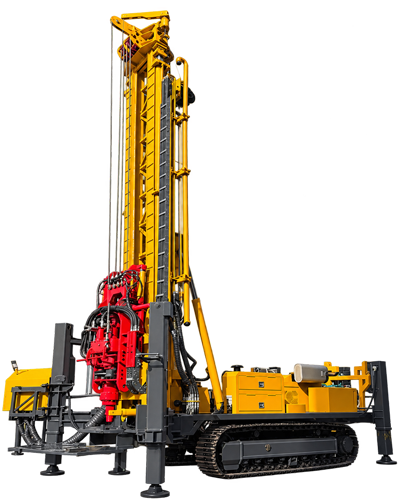
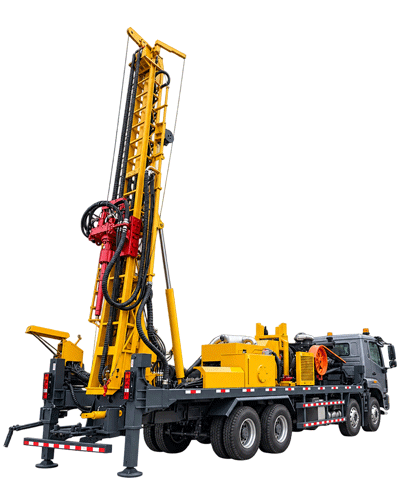
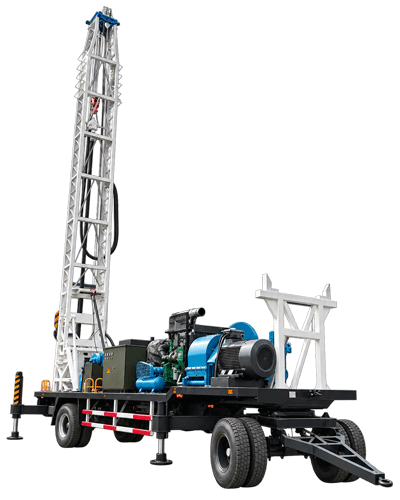
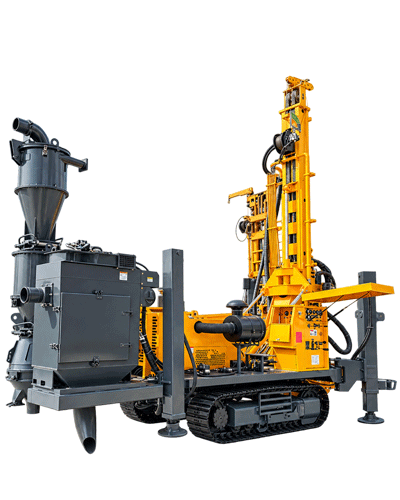
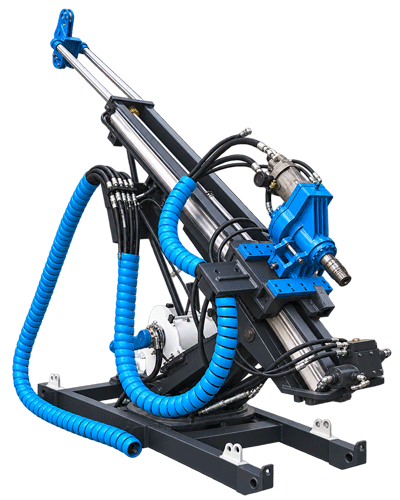
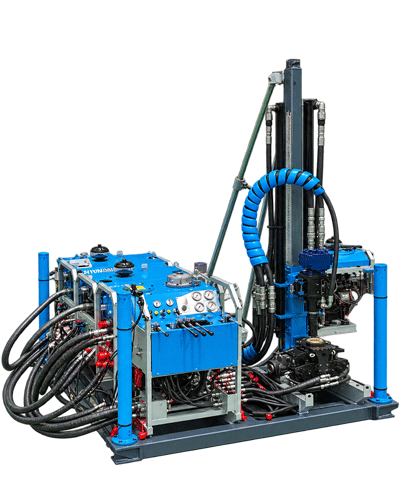
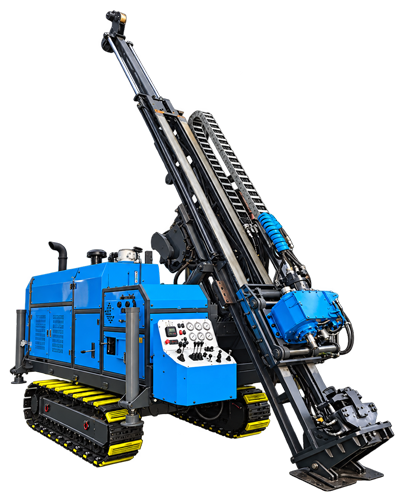
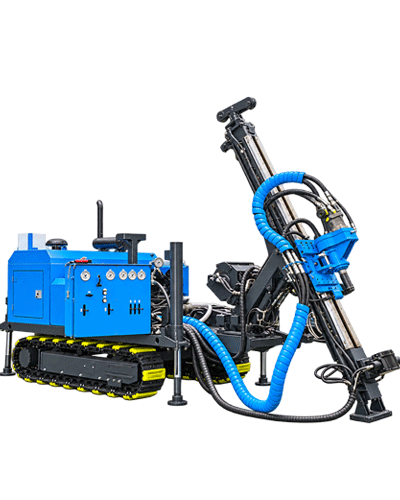
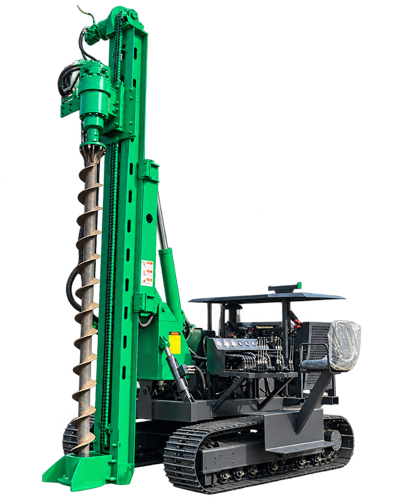
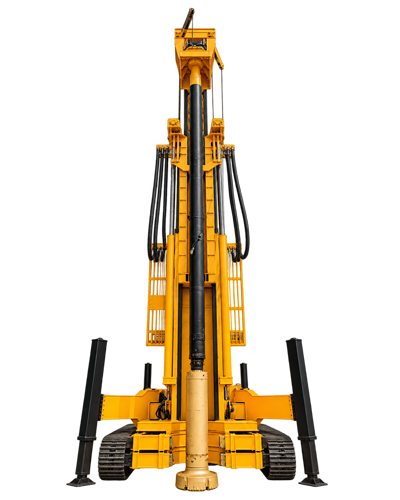
"This machine has 360° rotation—does that mean I never have to move it for any pile position?" This question comes up often in discussions about selecting photovoltaic pile drivers. It interprets 360° rotation as an ability to align with holes across the entire site, but in the public information, 360° describes the rotation range of the upper working mechanism relative to the chassis—not automatic chassis travel, and not the ability of the drilling tool to reach any pile position. The PV390R lists 360° rotation, a dual-cylinder left-right swing arm, 500 mm telescopic compensation and 120° mast pitch. Each of these functions handles a different segment of adjustment. Together they can reduce some full-machine repositioning, but how much depends on how the pile positions are laid out, where the equipment is parked, and whether the ground can support it.
The question this article addresses is very specific: break down the claim of "no need to move the machine" to see which pile-position adjustments can be handled by the upper mechanism, which still require chassis movement, and what site information needs to be prepared before making a judgment.
First, clarify which part is actually rotating
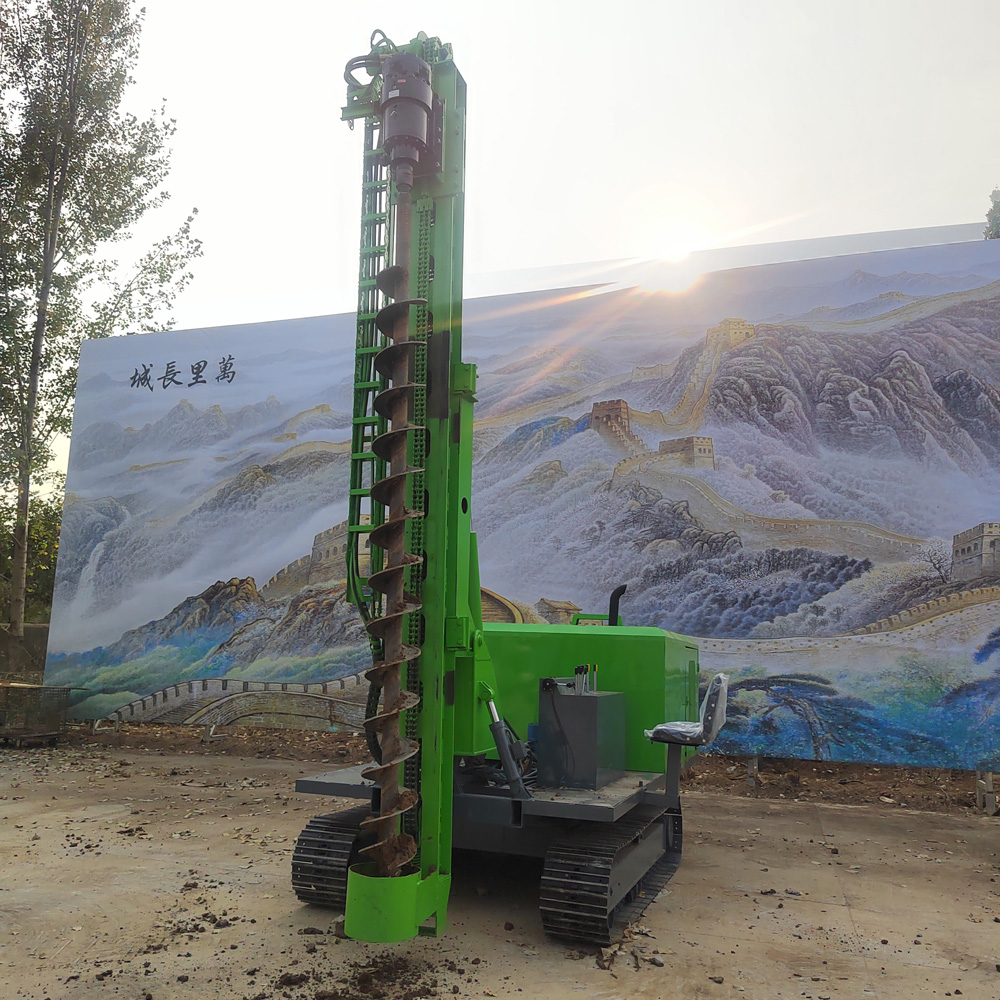
The PV390R information describes 360° rotation as "the upper working mechanism can make directional adjustments over a larger range around the chassis." The subject here is the upper working mechanism; the chassis position remains unchanged. In other words, when the equipment is parked in one position, the mast and drilling tool can turn to different orientations to align with holes; but displacement of the whole machine across the site is still performed by the tracked chassis.
This definition directly constrains the judgment that "no machine repositioning is needed for every pile position." Rotation addresses directional coverage around a single parking point; it does not turn the equipment into a platform that can travel between pile positions on its own. When a pile position is beyond the reach of the upper mechanism, the chassis still has to move.
What deviation each of the four adjustment groups covers
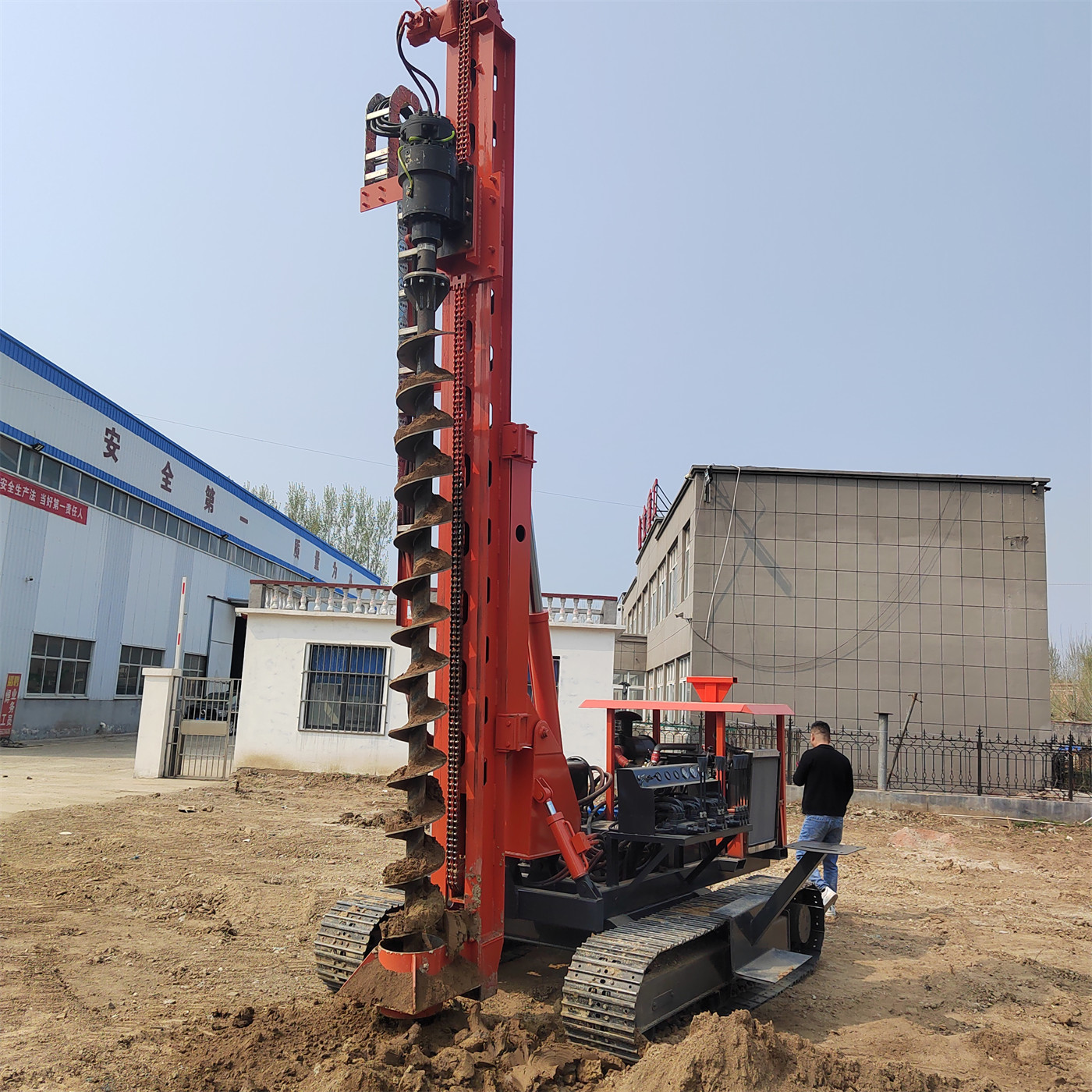
Hole alignment on the PV390R does not rely on rotation alone. The structures related to hole alignment in the information include 360° rotation, the dual-cylinder left-right swing arm, 500 mm telescopic compensation and 120° mast pitch. They correspond to deviations in different directions, and discussing them together easily leads to overestimating any single function.
| Adjustment item | Description in the information | Mainly corresponds to |
|---|---|---|
| 360° rotation | Upper working mechanism rotates around the chassis | Directional adjustment around a single parking point |
| Dual-cylinder left-right swing arm | Mast swings left and right | Lateral hole-alignment correction after the chassis is stabilized |
| 500 mm telescopic compensation | Fine adjustment in the front-rear direction | Detailed alignment for front-rear pile position deviation |
| 120° mast pitch | Mast pitch angle adjustment | Attitude adjustment for slopes or inclined pile positions |
As this table shows, rotation handles direction, the swing arm handles lateral movement, telescopic compensation handles front-rear movement, and pitch handles angle. All of them serve to let the equipment handle more hole-alignment deviation without moving the chassis, but none of the information states that these adjustments can cover any pile spacing. When the pile layout exceeds the correction range of telescopic compensation and the swing arm, the tracks still have to move the machine back into position.
The relationship between pile density and equipment parking position
The information mentions that, with the PV390R's 360° rotation, left-right swing arm and front-rear telescopic compensation combined, "more directional pile-position adjustments can be completed from a single parking position, reducing the time spent repositioning the whole machine for every pile point." The wording here is "more directions" and "reduce", not "all pile positions" and "completely unnecessary".
How much repositioning can actually be reduced depends on three site conditions: pile spacing, the positional relationship between the equipment parking point and the group of pile positions, and whether the site allows the equipment to park stably between pile positions. The information does not give the pile radius that can be covered after rotation, nor the maximum hole-alignment offset when the swing arm and telescopic compensation are combined, so it is impossible to calculate "how many piles can be driven from one parking point" from the parameters alone. This part needs to be checked separately against the project pile layout drawing and the actual equipment dimensions.
The prerequisite for not moving the machine is that the chassis can stand firm first
When discussing "no need to move the machine", what is easily overlooked is the chassis parking condition. The PV390R uses a tracked chassis with 400 mm track shoe width and a rated climbing angle of 35°. Applicable sites include photovoltaic plant areas, dirt roads, slopes, gravel ground and general unpaved construction surfaces. These conditions show that the equipment can enter non-hardened sites, but that does not mean any position can serve as a stable parking point.
The information also specifically notes: when working on slopes, pay more attention to the change in center of gravity after rotation, and do not judge safety based on the maximum climbing parameter alone. Rotation of the upper working mechanism changes the machine's center of gravity, so the feasibility of "not moving the machine" on slopes requires first confirming that the parking platform is stable, and only then discussing rotational hole alignment. In areas with soft ground, obvious cross slopes or uncompacted backfill, the parking position may need to be prepared first; this is outside the scope of the equipment parameters.
Working radius is an inherent constraint of the rotation function
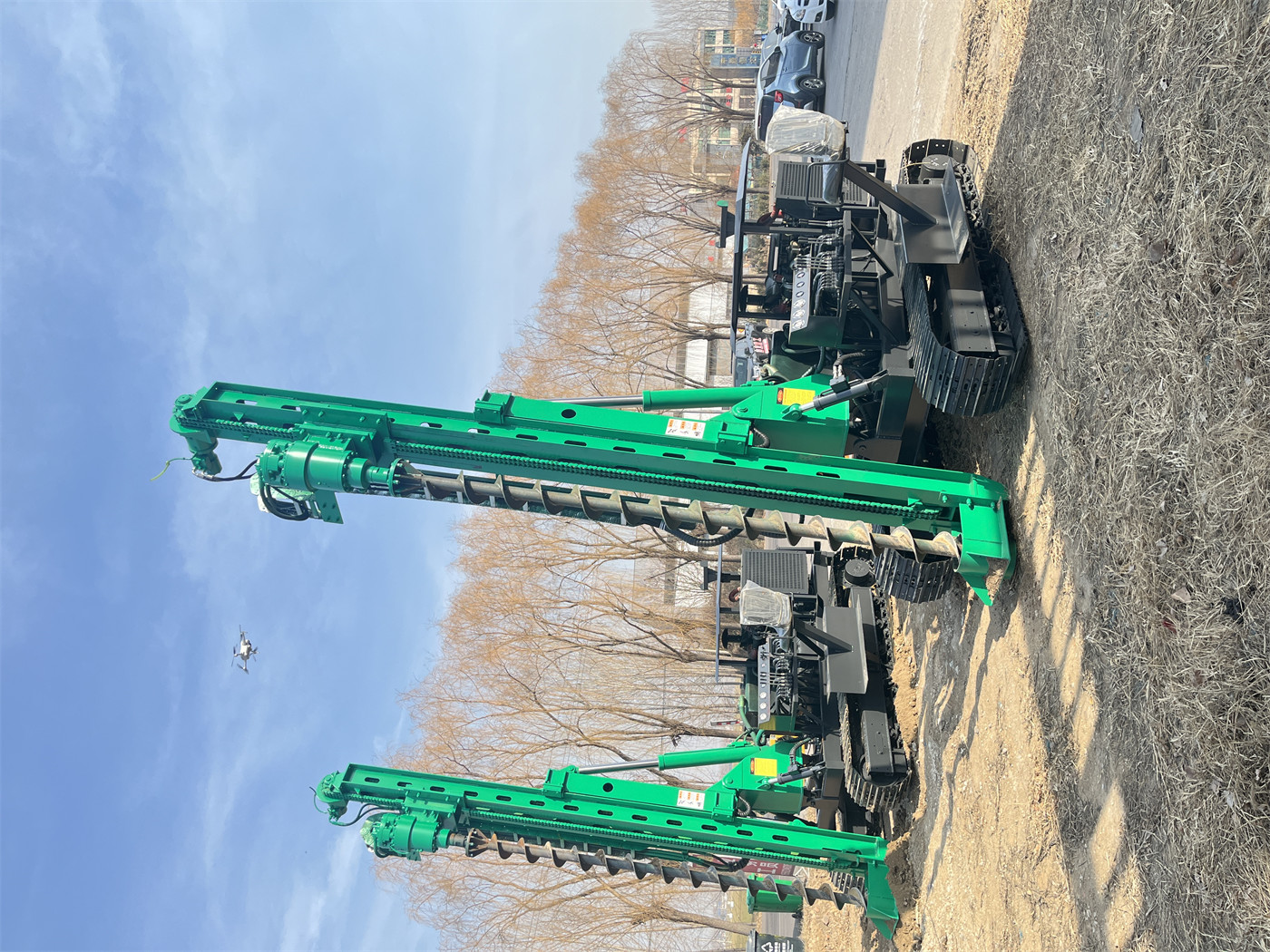
In the construction precautions, the information states: before rotating the upper structure, confirm that there are no people, vehicles, overhead lines or other machinery interference nearby; during drilling, personnel must not enter the rotating drill pipe, chain pressurizing mechanism, mast swing and upper rotation range. This means that while 360° rotation brings flexibility in hole alignment, it also defines a working radius centered on the equipment.
In areas with dense pile positions, this working radius is directly related to the positions of adjacent piles, construction access routes and other machinery. The larger the rotation range, the larger the area that must be cleared. Therefore, "not moving the machine" saves the time of turning the whole machine around and short-distance travel, but it brings in the safety confirmation work for the rotation area. Both must be viewed within the same construction organization plan; you cannot count only one side.
Hole diameter and hole depth determine another set of conditions
The hole-alignment method addresses "whether the drilling tool can be aimed at the pile position", not "whether it can drill and drill down". The PV390R information gives a drilling diameter of 80–600 mm, a drilling depth of 0–6 m, a reducer maximum torque of 13000 N·m and a drill pipe speed of 90 r/min. These parameters are related to pile type, stratum and drilling tool selection.
The information clearly states that this equipment is photovoltaic and engineering piling/drilling equipment, not a water well drilling rig; its core value is shallow high-frequency pile-position construction, multi-angle operation and adaptability to complex sites. Therefore, even if 360° rotation reduces repositioning during hole alignment, whether a single hole can be drilled smoothly still depends on whether the hole diameter is within 80–600 mm, whether the hole depth is within 0–6 m, whether the stratum is suitable for chain-pressurized drilling, and whether the drilling tool selection matches conditions such as cobbles and backfill layers.
In which cases "no need to move the machine" is more likely to hold
Based on the available information, conditional judgments can be given rather than a uniform conclusion:
- When pile positions are arranged in a regular array, the spacing is within the range that the upper mechanism can cover in one pass locally, and the equipment parking position can be stably parked, the combination of rotation, swing arm and telescopic compensation is more likely to reduce the number of full-machine moves.
- When the site is unpaved ground such as dirt roads, grassland or gravel, the tracked chassis can enter, but whether the parking point is level and has sufficient bearing capacity needs on-site confirmation.
- When working on slopes, the 120° mast pitch provides attitude adjustment capability, but the change in center of gravity after rotation and the stability of the parking platform must be established first; the information does not give the safety boundary for rotational work on slopes.
- When pile spacing is large or the layout is irregular, the 500 mm telescopic compensation and swing arm correction may not be enough to cover the deviation, and chassis movement is still unavoidable.
Among these conditions, what the information can support is which adjustment functions the equipment has and how far the applicable scope is described; what it cannot support is the specific number of "how many pile positions can be completed from one parking point". The latter requires the project party to check point by point using the pile layout drawing, equipment outline dimensions and on-site ground conditions.
Items to confirm with the manufacturer before selection
If the project wants to use "reducing machine repositioning" as a reason for selection, it is advisable to put the following questions on the confirmation list rather than looking only at the 360° figure:
- After the upper mechanism rotates, what is the actual reachable range of the drilling tool center relative to the chassis? The information does not give this value.
- When the dual-cylinder swing arm and 500 mm telescopic compensation are used at the same time, how is the total correctable offset in the lateral and front-rear directions calculated?
- When working on slopes, are there clear limits between the rotation angle and the allowable cross slope and longitudinal slope? The information only notes to pay attention to the change in center of gravity.
- In areas with dense pile positions, what are the minimum safety distance requirements between the rotational working radius and adjacent pile positions, overhead lines and construction access routes?
- Under different pile types, hole diameters and strata, what is the correspondence between chain pressurization and drilling tool configuration? The information does not provide a drilling tool model list.
Most of this information is not in the existing parameter table and belongs to the part that needs to be confirmed separately in combination with project conditions and the manufacturer's technical information. Confirming these clearly and then judging to what extent 360° rotation can reduce full-machine repositioning is closer to reality than directly accepting the claim that "no machine repositioning is needed for every pile position".