


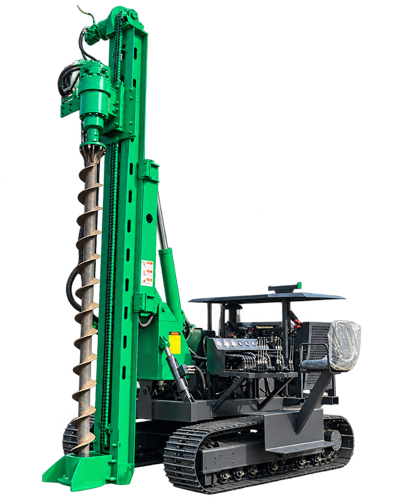
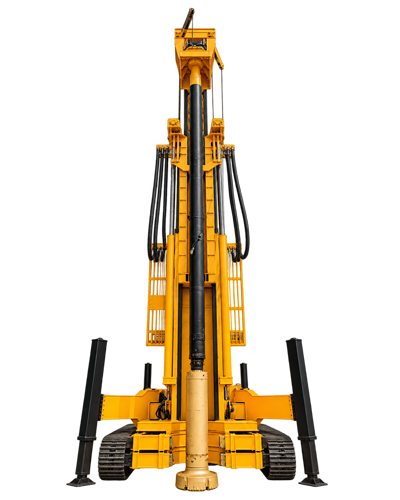
Pile positions in photovoltaic sites are usually arranged in rows by array, with only a few meters or even less between adjacent pile points. If the equipment must first move the whole machine and then realign the hole for every pile position, the day's construction rhythm will be fragmented by a large number of repetitive actions. What actually needs to be assessed is whether the number of whole-machine movements can be reduced when pile positions are dense, and, once reduced, how hole alignment is accomplished.
Breaking this question down involves two things: first, whether the working mechanism above the chassis can be adjusted to adjacent pile points after the machine has stopped stably; second, after the adjustment range is expanded, whether the equipment's own drilling capability, site conditions and safety boundaries can still match. Based on publicly available information on the PV390R, this article explains which actions 360° rotation changes under such working conditions, and which prerequisites still need to be confirmed before work begins.
With dense pile positions, which processes consume time when the whole machine is repeatedly repositioned?
When conventional piling equipment that does not rely on upper-structure rotation handles adjacent pile positions, it usually follows a repetitive process: move the chassis, stop, adjust the mast direction, align the hole, drill, pull the drill, and then move to the next point. The denser the pile positions, the more times this sequence is repeated, and the more noticeable the time taken by whole-machine starting and stopping, track steering and realignment of the hole becomes.
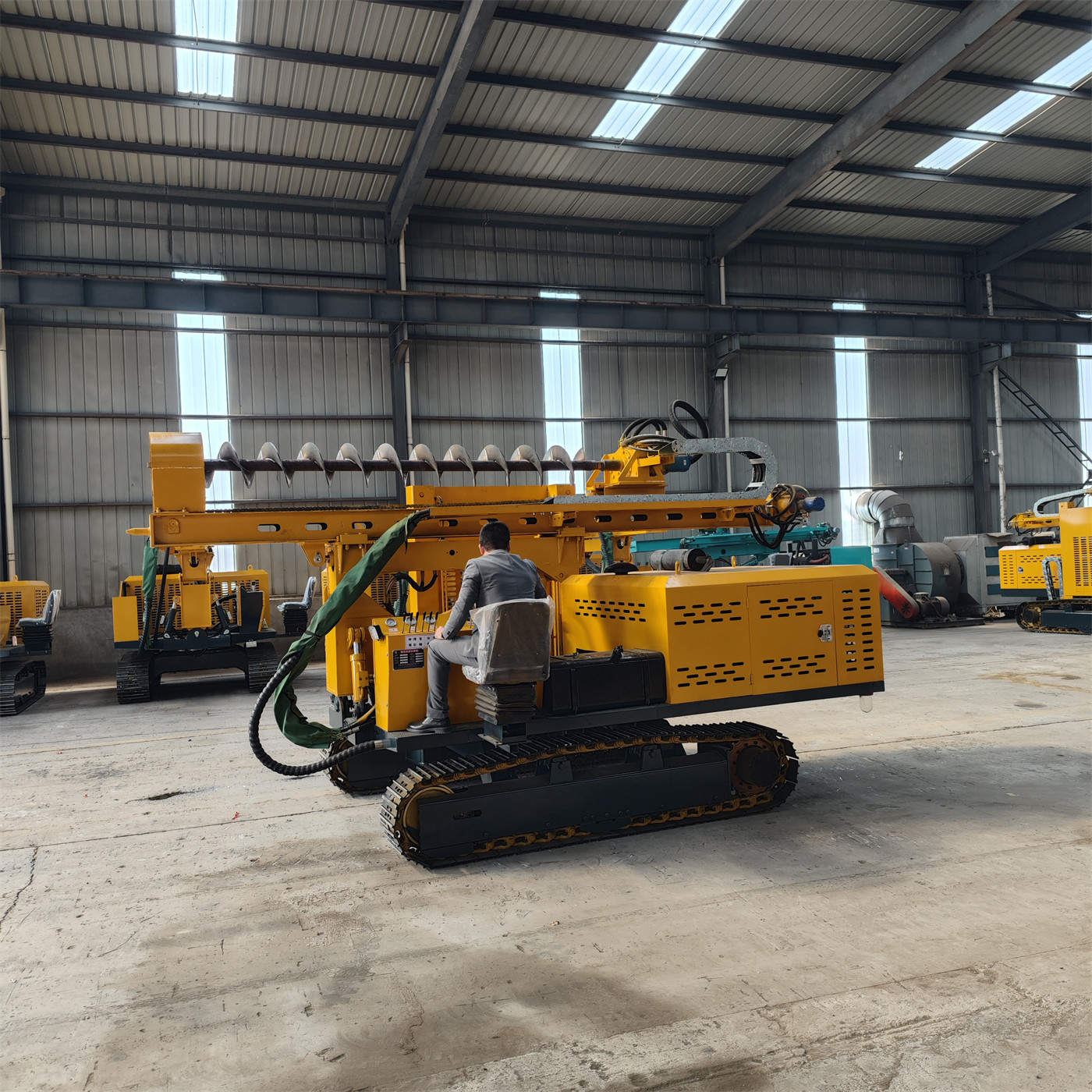
With equipment whose upper mechanism can rotate, the process becomes: the chassis stops stably at one stopping position, the upper rotation and mast swing arm cover an area of pile positions, and during hole alignment a general directional adjustment is made first, followed by detailed correction using the swing arm and telescopic compensation. What is reduced is the number of whole-machine turnarounds and short-distance repositioning, not the drilling itself.
In the PV390R information, which structures correspond to "less machine movement"?
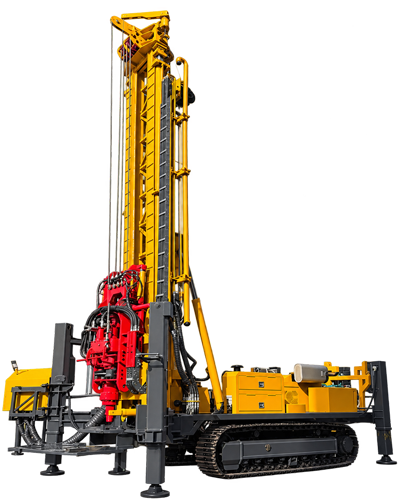
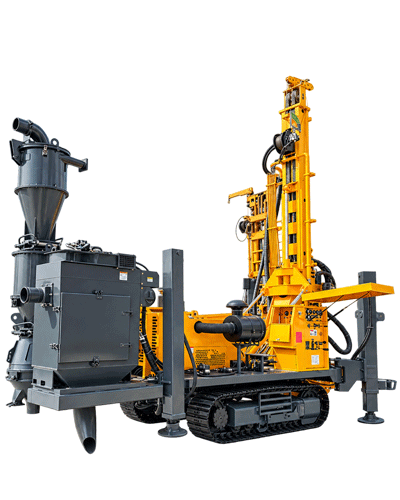
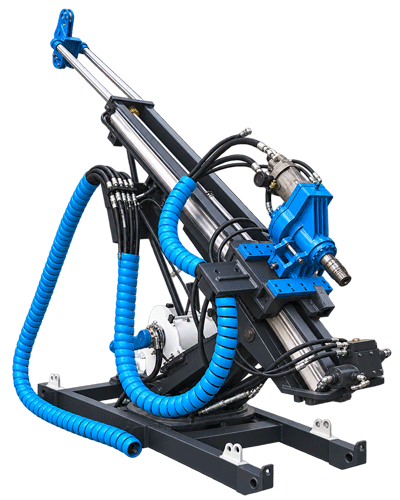
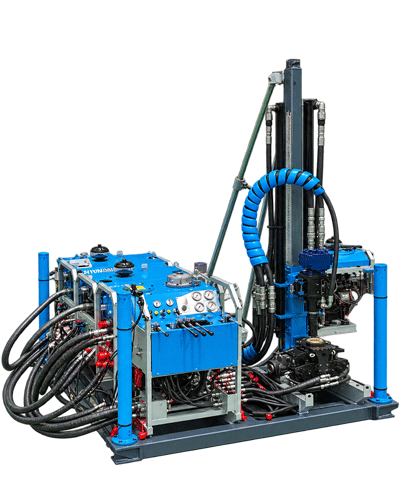
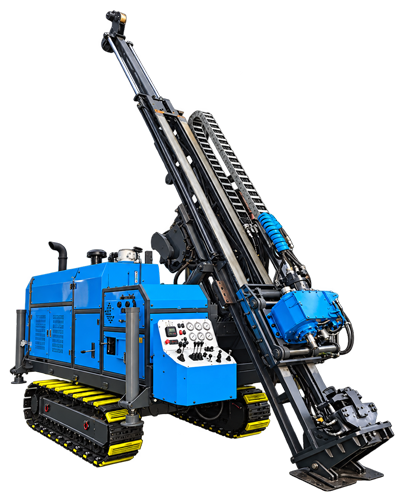
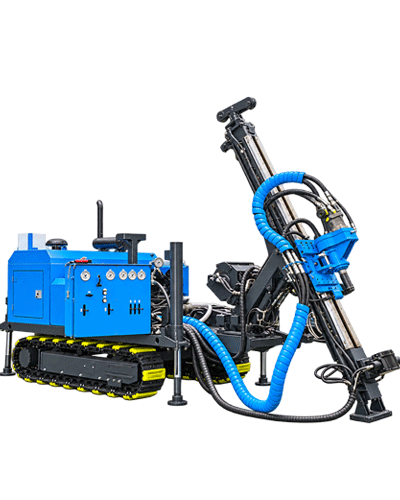
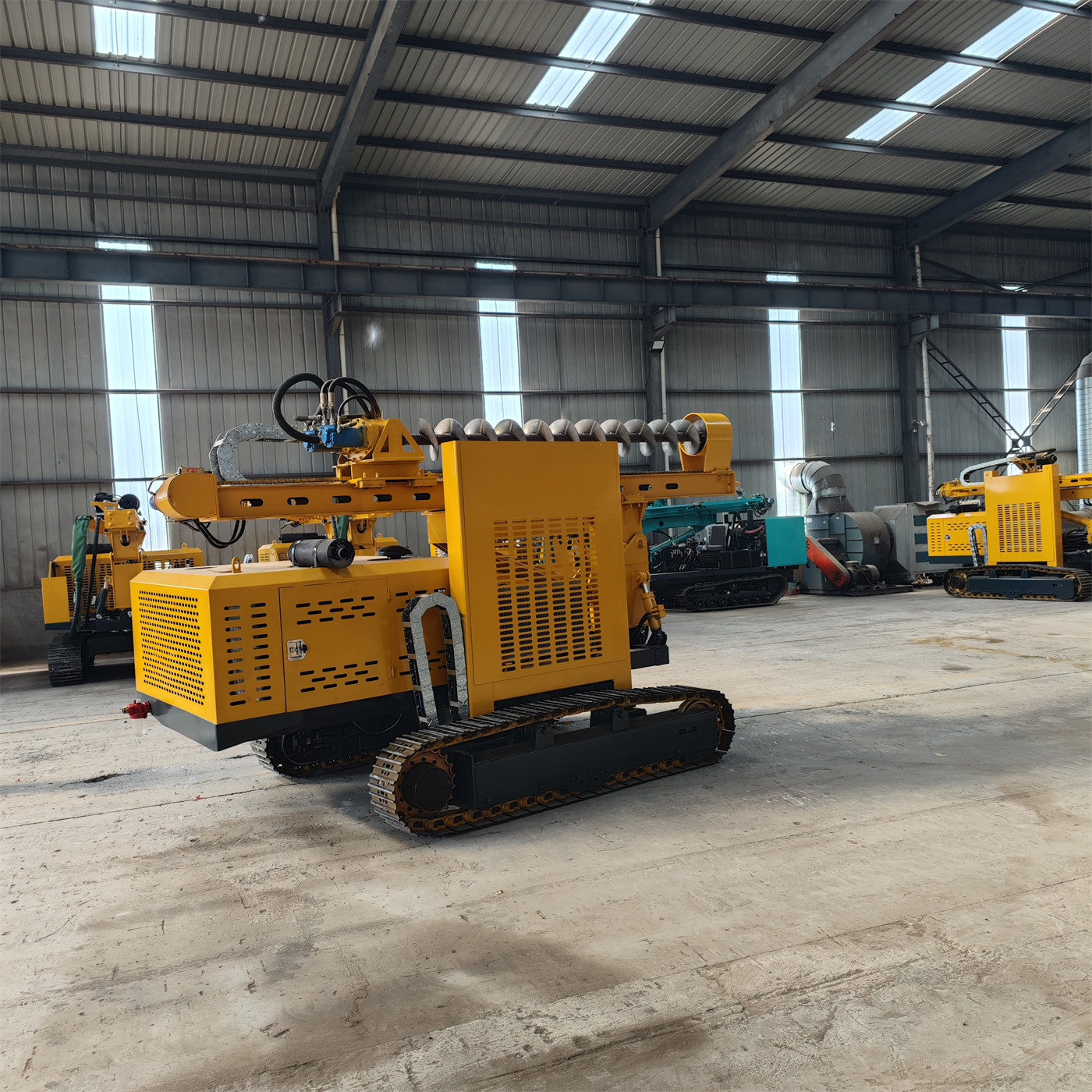
The PV390R is a four-cylinder 360° rotary hydraulic photovoltaic pile driver. The publicly available information lists several structures related to hole alignment adjustment: upper 360° rotation, dual-cylinder left and right swing arms, 120° mast pitch and 500 mm telescopic compensation. They have different roles: 360° rotation provides general directional coverage, the left and right swing arms handle lateral correction, mast pitch adjusts the drilling posture, and telescopic compensation is used for fine adjustment in the fore-and-aft direction.
The information also gives a track shoe width of 400 mm, a climbing angle of 35°, and overall dimensions of 5200 × 2300 × 2800 mm, which correspond to movement and passage conditions within the site. It should be noted that 360° rotation does not mean that no machine movement is needed for every pile position: when pile spacing exceeds the coverage of the combination of rotation and swing arms, when ground height differences are large, or when obstacles are present, the whole machine still needs to be repositioned.
| Structure | Corresponding action | Repetitive step reduced |
|---|---|---|
| Upper 360° rotation | Adjust the direction of the working mechanism around the chassis | Reduces whole-machine turnarounds and short-distance repositioning |
| Dual-cylinder left and right swing arms | Lateral correction of hole position after the chassis stops stably | Reduces chassis movement for lateral deviation |
| 120° mast pitch | Adjust drilling posture | Reduces time spent finding the working angle |
| 500 mm telescopic compensation | Fine adjustment in the fore-and-aft direction | Reduces chassis movement for fore-and-aft hole alignment |
Before reducing machine movement, drilling capability must first cover the pile type
The hole alignment method addresses "whether the position can be reached"; whether drilling can be performed is constrained by another set of parameters. The PV390R information specifies a drilling diameter of 80–600 mm, a drilling depth of 0–6 m, a reducer torque of 13000 N·m, a drill rod speed of 90 r/min, and power from an 85 kW Yuchai four-cylinder engine. These values correspond to shallow photovoltaic support foundation pre-drilling, guide hole drilling and other shallow foundation projects, not water well drilling equipment.
Dense pile positions often mean that hole diameter and depth are repeated according to the same foundation design, but the formation may change along the route. Soil layers and loess are usually easier to drill; clay requires attention to bit balling and cuttings removal; cobble sand, gravel and backfill layers are prone to causing drill bit bouncing, hole deviation or jamming; the information clearly states that after replacing with impact drilling tools it can be used for strongly weathered rock and rock layers, but does not give the impact hammer model or impact energy, so no additional commitment is made regarding specific hard rock efficiency.
Site conditions determine whether this solution can be implemented
The crawler chassis and 400 mm track shoes correspond to unpaved photovoltaic sites, including dirt roads, grassland, gravel ground and general slopes. The 35° climbing angle is the value specified in the information; actual mountainous construction must also consider cross slope, ground wetness and slipperiness, soil quality and the center of gravity of the whole machine; in particular, after the upper mechanism rotates, the center of gravity state of the whole machine changes, and safety cannot be judged solely on the maximum climbing parameter.
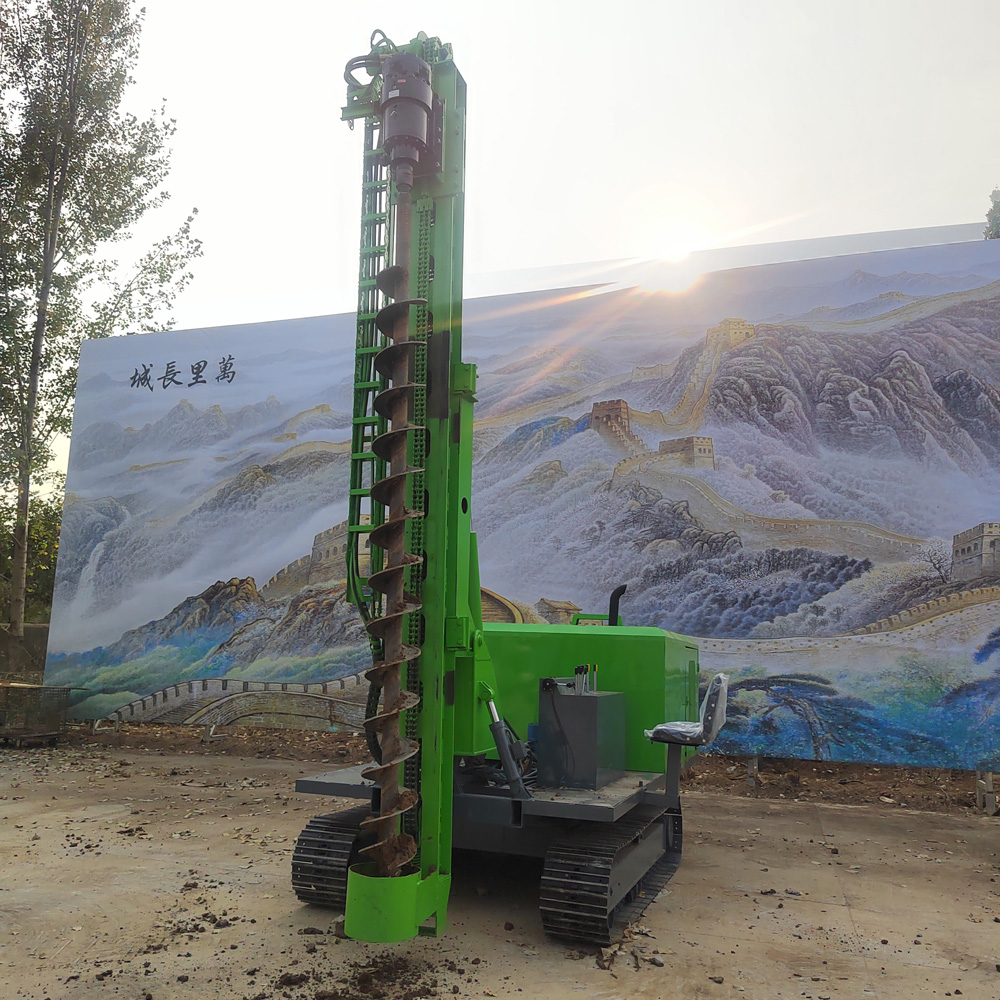
For array-type sites with dense pile positions, whether the equipment parking platform is stable, whether there are overhead lines and obstacles within the rotation range, and whether the spacing between adjacent pile points is within the coverage of rotation and swing arms are all conditions that must be verified on site before work begins. Commercial and industrial photovoltaic and factory-area projects must also consider space constraints among buildings, roads and equipment.
The working radius brought by 360° rotation must be managed separately
After the rotation range of the upper mechanism is expanded, the working radius also expands. The information indicates that before rotation it should be confirmed that there are no people, vehicles, overhead lines or other mechanical interference around; slope operations should pay attention to center-of-gravity changes after rotation; during drilling, personnel must not enter the rotation range of the drill rod, chain pressurizing mechanism, mast swing and upper rotation. These are safety boundaries in the equipment information and are not optional.
Items still requiring confirmation
- Whether the hole diameter, hole depth and pile type in the project foundation design fall within the 80–600 mm and 0–6 m range;
- Whether the site formation includes backfill layers, cobble layers or strongly weathered rock, and whether impact drilling tools need to be prepared;
- Whether the spacing between adjacent pile positions and the equipment parking position are within the combined coverage of 360° rotation and 500 mm telescopic compensation;
- For mountainous or slope sites, the cross slope, wetness and slipperiness, and center-of-gravity changes after rotation must be verified on site;
- The final hole-forming efficiency and hole quality are affected by geological conditions, drilling tool type, pile type, hole diameter and operating method, and shall be based on on-site working conditions and the project foundation design.